Stationary response and singular limits in a linear zonal gyrokinetic model
In a torus, passing particles go all the way around, while trapped particles bounce back and forth on the outer side. The paper’s model includes both.
What the paper shows and what it does not claim
Shows
When the quadratic energy is coercive, the energy-orthogonal stationary projection is determined by the field operator D0 = C − R∗ΠR.
Cesàro and Abel means converge strongly, but their operator-norm errors remain one when nonzero frequencies accumulate at zero.
The long-time and zero-detuning limits do not commute.
One coercive regularization of constrained initial data has an O(√ε) error bound in the energy coordinate.
Does not claim
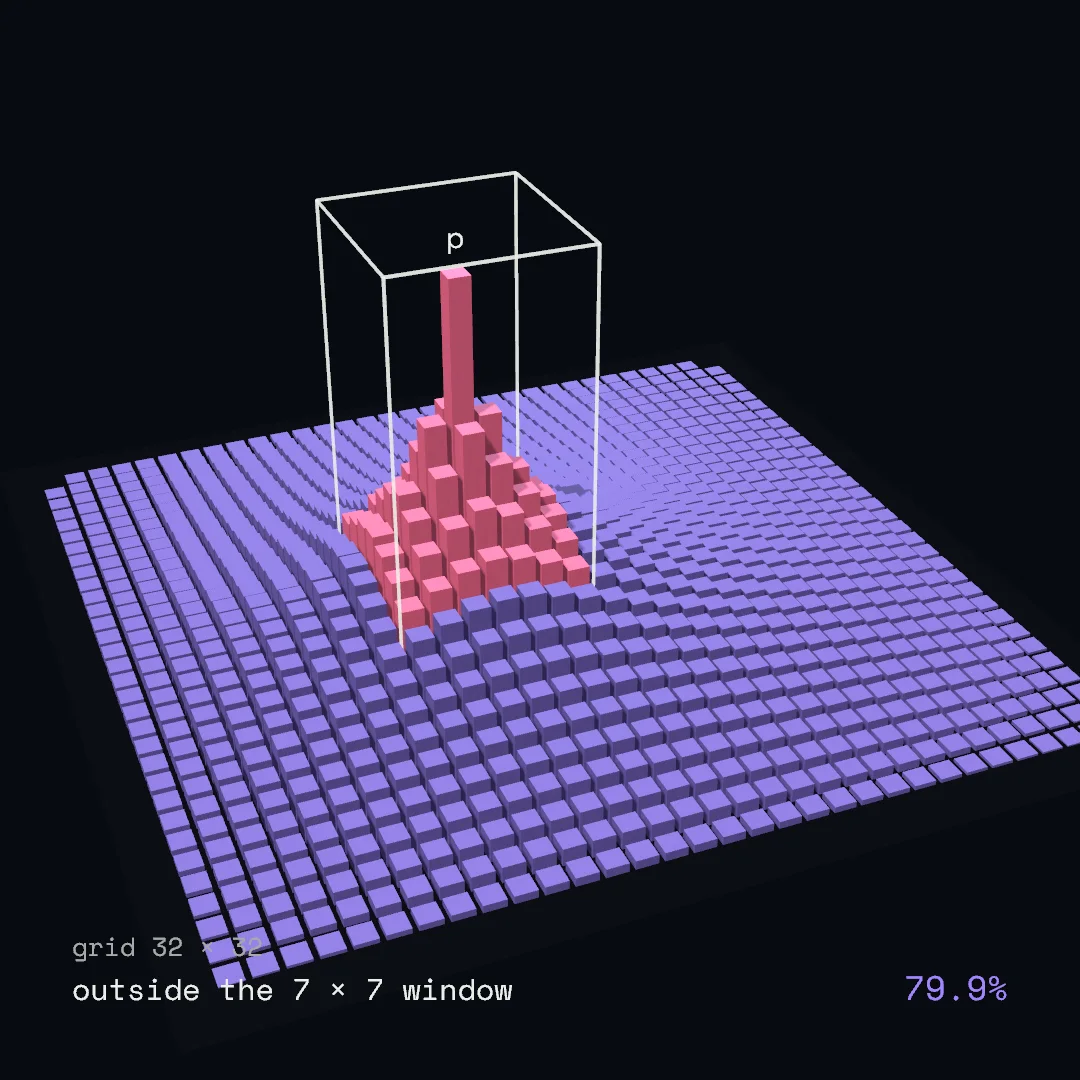
The 23.2% change from ordinary orbit averaging is stable under the reported grid refinements and is not a certified continuum value.
Unrestricted initial data retain fast charge oscillations.
We derive the stationary response of a linear periodic gyrokinetic model without assuming uniform kinetic relaxation, and show that two of its limits do not commute.
- Field
- Physics, plasma physics
- Published
- 19 October 2026 on Zenodo
- License
- CC BY 4.0
- File
- 21 pages, 429 KB
Abstract
We derive the stationary response of a linear periodic gyrokinetic model without assuming uniform kinetic relaxation. When the quadratic energy is coercive, the energy-orthogonal stationary projection is determined by the field operator D0 = C − R∗ΠR. Cesàro and Abel means converge strongly, but their operator-norm errors remain one when nonzero frequencies accumulate at zero. Adding the same constant drift detuning to every species removes the stationary space and generates a slow unitary evolution on its former kernel, so the long-time and zero-detuning limits do not commute.
At vanishing polarization, a homogeneous kinetic-species model instead imposes charge and current constraints. We construct a self-adjoint evolution on the continuous-velocity constraint space and prove an O(√ε) error bound, in the energy coordinate, for one coercive regularization of constrained initial data; unrestricted data retain fast charge oscillations. In a specified 25-dimensional orbit discretization with trapped and passing particles, replacing the energy projection by ordinary orbit averaging changes the stationary field by 23.2%. The projection and singular-limit results are analytical; the percentage is stable under the reported grid refinements and is not a certified continuum value.
Cite
@misc{mantisdiscovery_23484800, title = {Stationary response and singular limits in a linear zonal gyrokinetic model}, author = {{Mantis Discovery}}, year = {2026}, publisher = {Zenodo}, doi = {10.5281/zenodo.23484800}}